 Reviews


 Proudly American


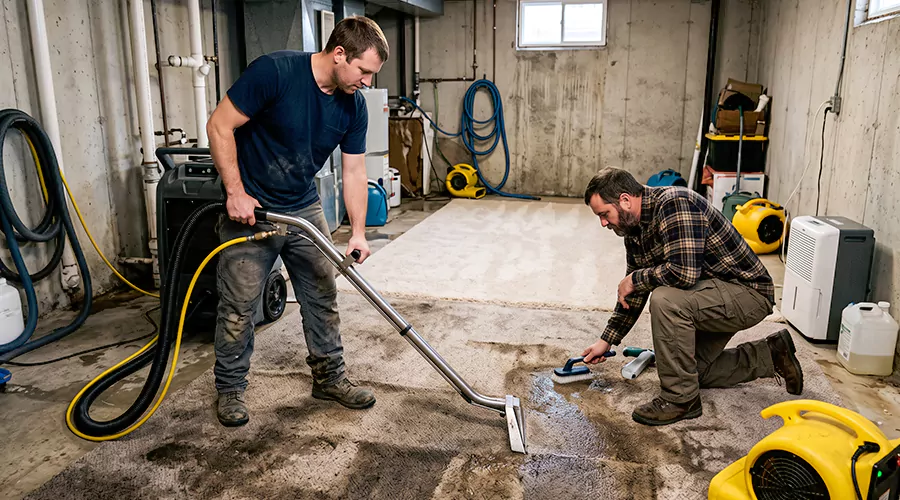
Carpet that has directly contacted sewage usually should not be kept because wastewater can penetrate the fibers, backing, and padding beneath it. Surface cleaning cannot reliably address contamination trapped inside these porous layers. Carpet outside the contaminated area may remain when it stayed dry and was protected from sewage.
A sewage backup is different from a clean-water spill. Sewage backup cleanup must consider the water source before deciding what can safely be kept.
Why Is Sewage-Contaminated Carpet Difficult to Save?
Carpet is made of several layers that can hold contaminated water. The visible fibers may dry while the backing or padding underneath remains wet. Wastewater can carry bacteria and other contaminants into these layers. Cleaning the top surface does not necessarily reach everything below. Sewage backup cleanup therefore usually treats directly contaminated wall-to-wall carpet as a removal item rather than something to dry in place.
Does Carpet Padding Need to Be Replaced?
Yes. Padding that directly contacts sewage generally needs removal because it is highly absorbent and can hold wastewater against the subfloor.
| Carpet Component | Typical Response After Direct Sewage Contact |
|---|---|
| Carpet fibers | Usually remove |
| Carpet backing | Usually remove with carpet |
| Carpet padding | Remove |
| Tack strips | Evaluate for contamination |
| Sealed concrete below | Clean and disinfect |
| Wood subfloor | Clean then dry when sound |
Removing the padding exposes the floor below so remaining contamination and moisture can be addressed.
What If Only a Small Corner of Carpet Got Wet?
A small affected area does not automatically make contaminated carpet safe to keep. Sewage can move laterally through padding farther than the visible wet mark.
The decision should consider:
- Where the wastewater originated
- How far it traveled
- Whether padding became wet
- How long the carpet stayed contaminated
- Whether the subfloor was affected
- Whether sewage reached nearby walls
Cutting away only the visibly stained spot can miss contamination beneath adjacent carpet.
Is Sewage Different From a Clean Plumbing Leak?
Yes. Carpet affected by a recent sanitary supply-line leak may sometimes be extracted and dried when conditions are favorable. Sewage contains a much higher contamination risk. A carpet-cleaning machine can remove moisture without making contaminated porous material suitable to retain. Raw sewage cleanup requires material decisions based on contamination rather than whether the carpet still looks usable.
Can Steam Cleaning or Shampooing Save the Carpet?
Routine carpet cleaning should not replace removal of wall-to-wall carpet that has absorbed sewage. Shampooing works mainly on accessible fibers while contaminated water can remain in the backing or padding.
Steam or hot-water extraction also cannot correct:
- Saturated padding
- Contamination beneath tack strips
- Sewage in subfloor joints
- Wastewater wicked into drywall
- Hidden moisture under flooring edges
A carpet can smell better after cleaning while contamination remains below the surface.
What Happens to the Floor Under the Carpet?
The subfloor should be inspected after contaminated carpet and padding are removed. Sealed concrete is generally easier to clean than porous wood.
A typical sewage damage cleanup sequence is:
- Remove contaminated carpet and padding.
- Dispose of affected porous materials.
- Remove visible debris from the floor.
- Clean suitable hard surfaces.
- Apply an appropriate disinfectant.
- Dry the floor structure.
- Check moisture before installing new flooring.
Wood subfloor does not automatically need replacement. It may remain when it is structurally sound and can be properly cleaned and dried.
What Warning Signs Show Sewage Reached Beneath the Carpet?
Wastewater may travel under carpet before the upper fibers look fully wet.
Watch for these signs:
- Carpet feels damp beyond the visible area.
- A sewage odor remains after extraction.
- Padding makes a squishing sound.
- Baseboards start swelling.
- Tack strips remain wet.
- Subfloor moisture stays high.
- Carpet edges darken.
- Mold appears after several days.
Emergency sewage cleanup can help limit how far contamination spreads beneath connected flooring.
Can You Check the Carpet Yourself?
You can inspect the boundaries of the affected area without walking through sewage. Avoid pulling up contaminated carpet with bare hands because moving it can spread dirty water.
From a safe location:
- Identify the sewage source.
- Mark the visible wet boundary.
- Check whether nearby baseboards are damp.
- Note which rooms share continuous carpet.
- Photograph the affected area.
- Keep people and pets away.
Do not use a household vacuum on sewage-contaminated carpet.
Can an Area Rug Be Saved?
Area rugs are different because they can be removed from the building and treated separately. Whether a rug can be restored depends on its material and degree of contamination. A valuable rug may deserve specialist evaluation before disposal. Do not carry a sewage-contaminated rug through clean rooms without proper containment.
When Should You Call a Professional?
Professional sewage cleanup is appropriate when sewage reaches wall-to-wall carpet across more than a very small area. Help is especially useful when contamination has moved beneath flooring.
Seek professional assessment when:
- Several rooms share contaminated carpet.
- Sewage reaches electrical areas.
- The subfloor remains wet.
- Drywall is contaminated.
- A strong odor remains.
- Mold is already visible.
- The backup source cannot be stopped.
The cleanup scope should include materials beneath the carpet rather than only the upper fibers.
How Can You Prevent Future Carpet Loss?
Preventing another backup is the best way to protect replacement flooring. Repeated drainage problems should be investigated before new carpet is installed.
Useful steps include:
- Address recurring slow drains.
- Repair damaged sewer lines.
- Maintain septic systems on schedule.
- Consider a suitable backwater valve.
- Keep valuables off basement floors.
- Respond immediately to new backups.
Conclusion
Carpet that directly absorbs sewage generally should be removed because contamination can penetrate the fibers and padding below. Cleaning only the visible surface can leave wastewater beneath the floor covering. After removal, the subfloor should be cleaned and dried before replacement flooring is installed. Carpet that stayed completely outside the contaminated area may remain. When the boundary is uncertain, professional assessment can help define what was affected.
Frequently Asked Questions
Can carpet be disinfected after sewage exposure?
Directly contaminated wall-to-wall carpet is usually removed because surface disinfection cannot reliably treat the backing and padding.
Does carpet padding always need replacement after sewage?
Padding that absorbed sewage generally needs removal because it is highly porous.
Can carpet be saved after a clean-water leak?
Sometimes. Recent sanitary water exposure is evaluated differently from sewage contamination.
Does the subfloor need replacement too?
Not always. Sound subflooring may be cleaned and dried when contamination can be properly addressed.
Can an area rug be saved after sewage exposure?
Possibly. Valuable rugs can sometimes be evaluated separately because they can be removed from the building.
How soon should contaminated carpet be removed?
It should be addressed promptly after the backup source is controlled and the area is safe to enter.